TORONTO, March 09, 2026 (GLOBE NEWSWIRE) -- Nobel Resources Corp. (TSX – V: NBLC) (the “Company” or “Nobel”) is pleased to announce that it has identified a new mineralized, copper porphyry system at its Cuprita project (“Cuprita” or the “Project”) in northern Chile. Nobel is conducting the first ever diamond drill program on this highly prospective project. Exploration surveys over the past year by Nobel’s Chilean technical team identified key geological and geophysical characteristics, typically associated with mineralized porphyry copper systems in this region and commenced a diamond drill campaign in January (see the Company’s news release dated January 16, 2026 for further details).
The fourth drill hole in the Company’s drill program (CUP004) has intersected more than 100 meters of copper-bearing, mineralized porphyry. Assays are pending for all of the drilling to date and will be disclosed by the Company when received. It is not expected that the entire interval will be of commercially exploitable grade, however, porphyry systems are large targets and the technical results this early in the program are highly encouraging. Drill hole CUP 003 was the first hole that appeared to clip the edge of the system and intercepted weakly mineralized porphyry but provided important vectors based on the alteration observed in the hole.
From 218 meters depth in drill hole CUP004, there is a marked increase in tourmaline veins and the rock transitions into an intrusive breccia with porphyry clasts. Copper values measured by XRF (X-ray flouresence) (Olympus INNOV-X Delta Premium XRF Analyzer) increase locally, copper values up to 1,700 ppm were measured using a portable XRF within the breccia. The XRF Analyzer is calibrated once for the altitude at which it will be operated, which is valid until it moves to a different project. A second calibration is completed each time the machine is activated by taking a reading of the Authentic Olympus Delta 316 Standardization Coin, check sample (supplied with the equipment). This calibration takes 60 seconds. Portable XRF measurements are not as accurate as assays, they are point-source measurements on a portion of whole drill core. The values are accurate for the point measured but do not represent an average grade. It is an important field tool for estimating grade to assist with drill hole planning but should not be considered representative of the overall intercept.
From 285.5 m to 382 m, there is a sulfide-rich interval, characterized by an increasing density of quartz-sulfide veins, with disseminated pyrite ± chalcopyrite and locally bornite. Alteration in this zone is primarily sericite-chlorite, with moderate to strong intensity. Copper values measured using portable XRF reached up to 2.9% Copper in chrysocolla-bearing veinlets and 2.6% Cu in pyrite-chalcopyrite veinlets. The decrease in generalized oxidation and the appearance of primary sulfides suggest a transition from lithocap conditions to a mineralized domain. From 382 to 408.8 meters there is a post mineralization dike which is barren of sulfide minerals. Below the dike weakly mineralized porphyry was intercepted and the hole stopped at 460.6 meters depth.
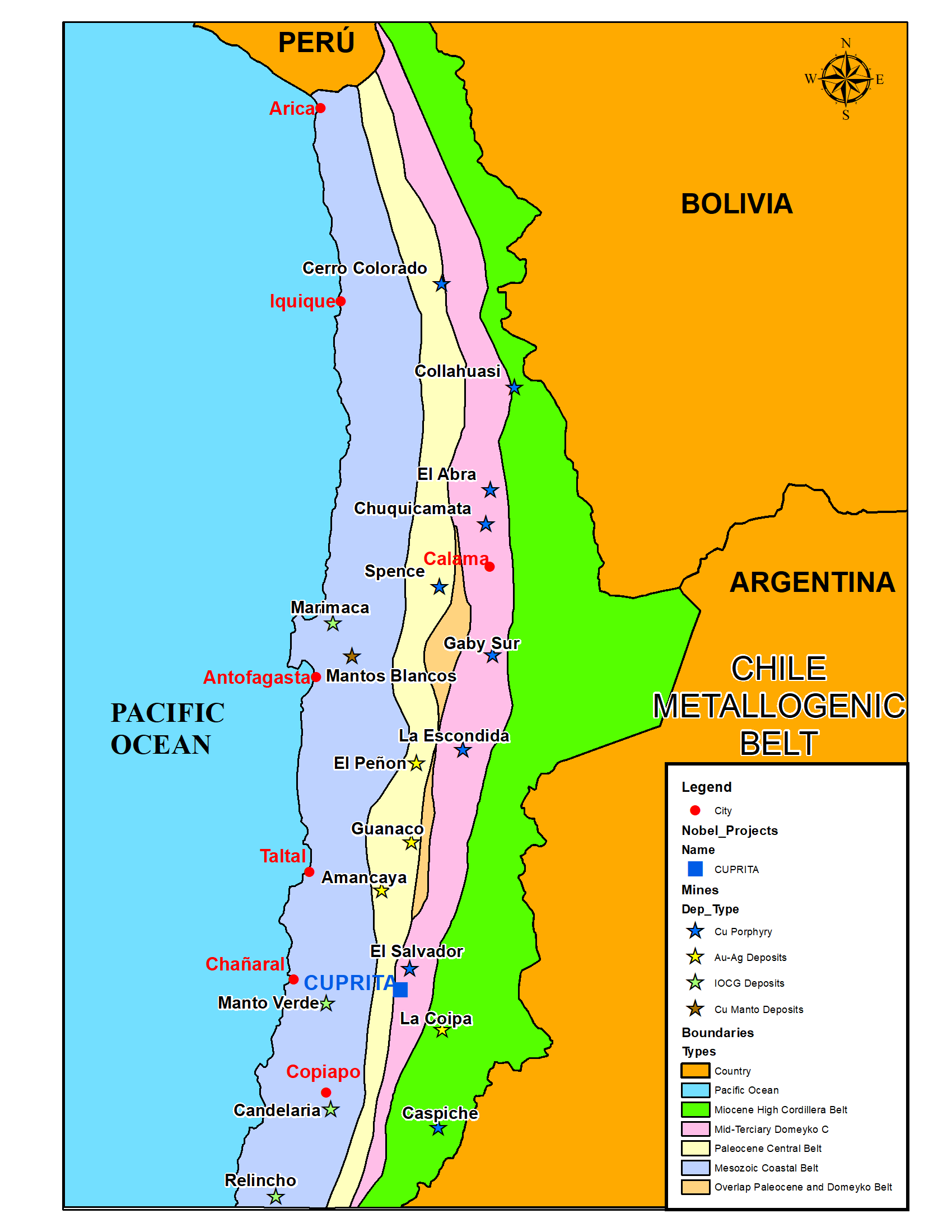
Figure 1: Location of Cuprita Project relative to copper deposits in the region.
Please note information regarding adjacent properties is provided for context only and is not necessarily indicative of the mineralization, grade, continuity or potential of the Project. Readers are cautioned not to place undue reliance on statements about adjacent properties.
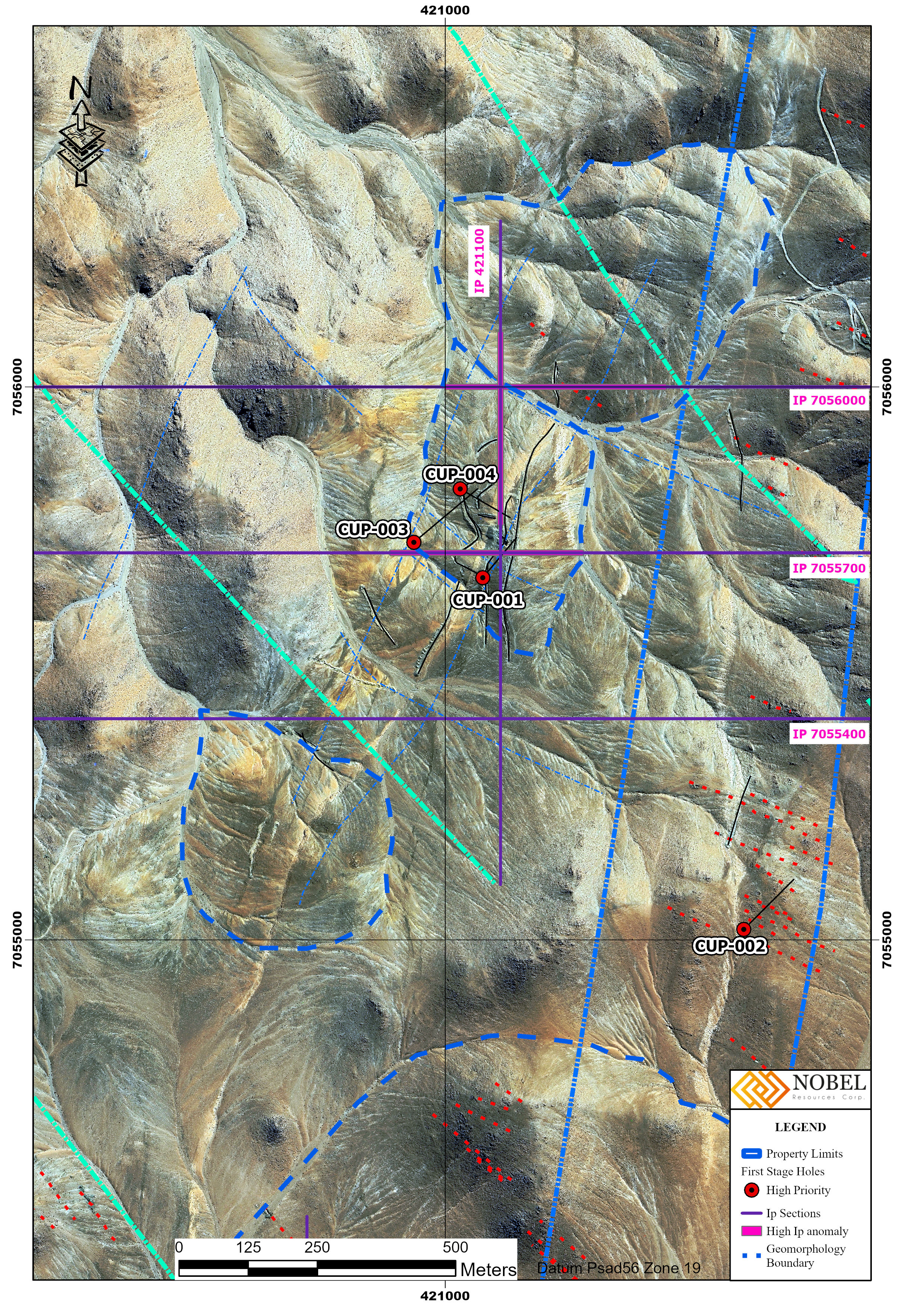
Figure 2: Drill hole locations and locations of IP lines. Drill holes CUP001 and CUP002 tested shallow trench targets unrelated to the deeper IP anomaly below the lithocap.
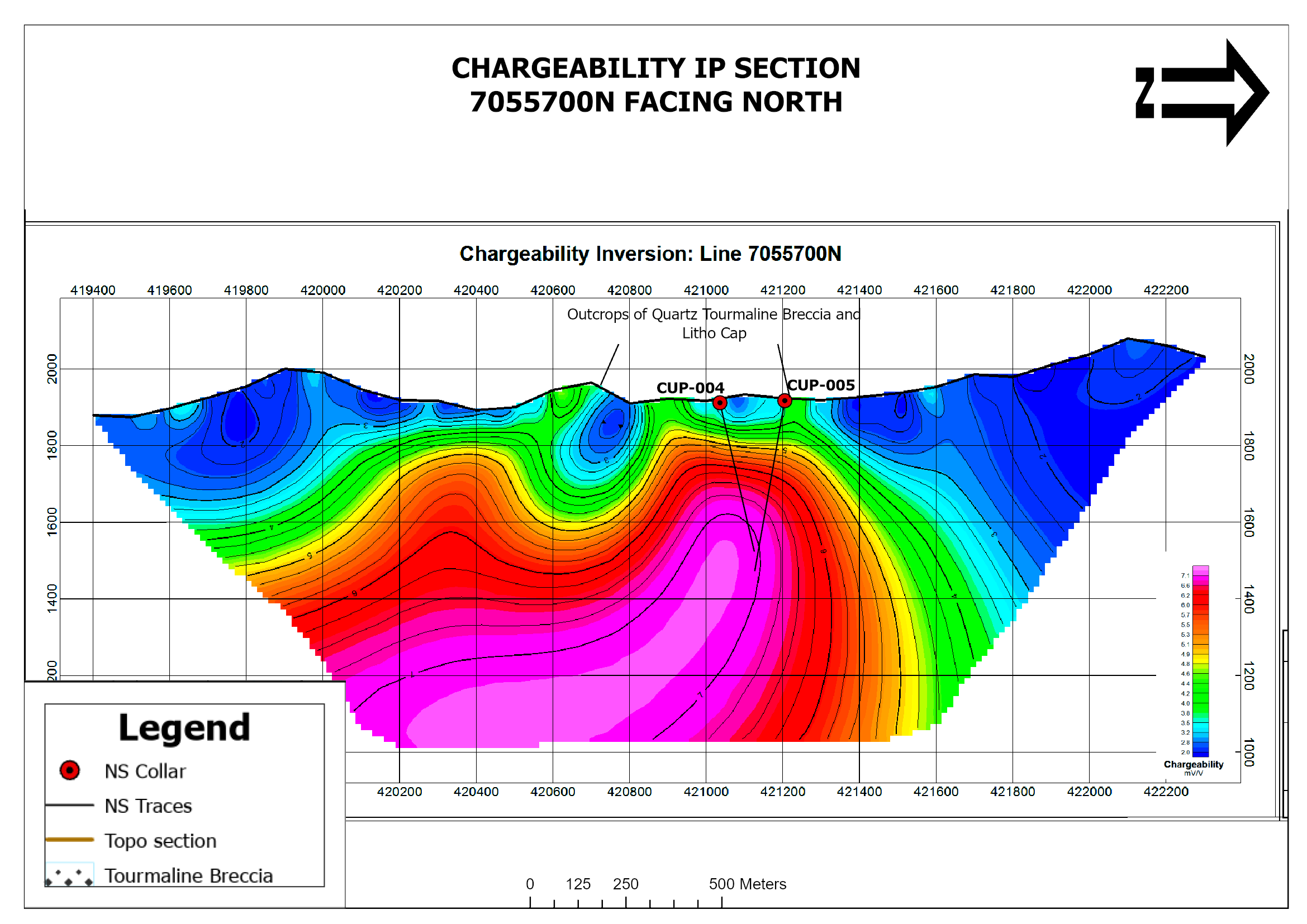
Figure 3: IP Chargeability section showing location of CUP004, which intercepts near the edge of the anomaly on this section. Planned hole CUP005 is approximately a 200 meters step out from CUP004 and is presently being collared.
The Company’s drill program is targeting an area centered around an extensive lithocap that was identified by Nobel geologists by surface mapping on the property during 2025. The lithocap is interpreted to have developed above a porphyry related hydrothermal system. The presence of a lithocap is a key signature of mineralized porphyries in this region. At Cuprita, it is characterized by strongly silicified rock forming a resistant silica-rich matrix with abundant cavities due to leaching of minerals and pyrite boxwork textures. The lithocap is oriented along a well-defined structural corridor trending approximately N10°–20°E, and has been mapped over an area of at least 1,000 m in length and 300 m in width defining a prominent alteration zone interpreted to overlie a large porphyry system. Access road construction for the drill program has created new outcrop exposures of the lithocap beyond these dimensions so the actual extent is not known but possibly extends over 2 km X 1km under overburden cover. The lithocap is located within a broader soil anomaly zone defined by Cu values above 200 ppm reaching a maximum of 9,000 ppm Cu in soils.
Key geological and geophysical parameters guiding the drill targeting at Cuprita include:
- Located within the Paleocene porphyry copper belt
- Widespread copper mineralization in outcrops (including small scale mines) and extensive copper geochemistry anomaly
- Presence of an extensive leach cap such as commonly associated with porphyry copper deposits in this region
- Extensive development of tourmaline breccia zones, a common pathfinder for porphyry copper projects in the region
- IP anomaly and magnetic low associated with the target area similar to low-pyrite porphyry copper deposits in the region
- Structural setting similar to major deposits including El Salvador, Cerro Colorado, Spence, Sierra Gorda, Fortuna – northeast structural corridor crosscut by northwest secondary faults
- Drill holes CUP-003 and CUP-004 confirm a clear vertical alteration zoning beneath the lithocap, transitioning from argillic to phyllic and propylitic alteration, a characteristic feature of large porphyry copper hydrothermal systems.
Vernon Arseneau, COO of Nobel, states: “Based on my over 35 years of exploring in the Chile for these types of deposits, it is very rare to find such an extensive new lithocap with associated mineralization and geophysical anomalies, that has never been drilled. This is an exciting start to the program.”
Quality Assurance and Quality Control (QA/QC)
Sampling is conducted in a manner designed to allow appropriate averaging and statistical analysis of the data for exploration evaluation and potential future resource estimation. Industry-standard QA/QC procedures are implemented throughout the sampling and analytical process, including the systematic insertion of certified reference materials, blanks and duplicate samples to monitor laboratory performance and analytical accuracy. Drill core samples are typically collected over intervals ranging from 1 to 2 metres, depending on geological boundaries. Shorter sample intervals are avoided whenever possible to maintain consistency and representativity of the sampled material. Prior to sampling, the drill core is geologically logged and photographed to create a high-resolution photographic record. Core samples are then split along the core axis using an electric rock saw by trained company technicians. One half of the core is sent for analysis while the remaining half is retained on site for reference and verification.
As part of the QA/QC program, one certified reference standard is inserted every 20 core samples. Additionally, one coarse blank, one fine blank and one internal duplicate sample are inserted approximately every 50 core samples to monitor contamination, analytical precision and laboratory performance.
To ensure sample security and compliance with NI 43-101 chain-of-custody standards, samples are placed in sealed rice bags with numbered security tags at the project site. Samples are then transported by company personnel via truck to the analytical laboratory. Custody and transfer of the samples always remain under the responsibility of company personnel. Sample preparation and analytical work are carried out by Andes Analytical Assays, an independent certified laboratory.
Qualified Person
The scientific and technical information in this news release has been reviewed and approved by Mr. David Gower, P.Geo., as defined by National Instrument 43-101 of the Canadian Securities Administrators. Mr. Gower is a consultant of Nobel and is not considered independent of the Company.
About Nobel
Nobel Resources is a Canadian resource company focused on identifying and developing prospective mineral projects. The Company has a team with a strong background of exploration success.
For further information, please contact:
Lawrence Guy
Chairman and Chief Executive Officer
+1 647-276-0533
Vincent Chen
Investor Relations
[email protected]
www.nobel-resources.com
Cautionary Note Regarding Forward-looking Information
This press release contains “forward-looking information” within the meaning of applicable Canadian securities legislation. Forward-looking information includes, without limitation, the mineralization and prospectivity of the Project, the Company’s ability to explore and develop the Project, the timing and results of assays, the Company’s ability to obtain adequate financing and the Company’s future plans. Generally, forward-looking information can be identified by the use of forward-looking terminology such as “plans”, “expects” or “does not expect”, “is expected”, “budget”, “scheduled”, “estimates”, “forecasts”, “intends”, “anticipates” or “does not anticipate”, or “believes”, or variations of such words and phrases or state that certain actions, events or results “may”, “could”, “would”, “might” or “will be taken”, “occur” or “be achieved”. Forward- looking information is subject to known and unknown risks, uncertainties and other factors that may cause the actual results, level of activity, performance or achievements of Nobel, as the case may be, to be materially different from those expressed or implied by such forward-looking information, including but not limited to: general business, economic, competitive, geopolitical and social uncertainties; the actual results of current exploration activities; risks associated with operation in foreign jurisdictions; ability to successfully integrate the purchased properties; foreign operations risks; and other risks inherent in the mining industry. Although Nobel has attempted to identify important factors that could cause actual results to differ materially from those contained in forward-looking information, there may be other factors that cause results not to be as anticipated, estimated or intended. There can be no assurance that such information will prove to be accurate, as actual results and future events could differ materially from those anticipated in such statements. Accordingly, readers should not place undue reliance on forward-looking information. Nobel does not undertake to update any forward-looking information, except in accordance with applicable securities laws.
NEITHER TSX VENTURE EXCHANGE NOR ITS REGULATION SERVICES PROVIDER (AS THAT TERM IS DEFINED IN THE POLICIES OF THE TSX VENTURE EXCHANGE) ACCEPTS RESPONSIBILITY FOR THE ADEQUACY OR ACCURACY OF THIS RELEASE.
Photos accompanying this announcement are available at:
https://www.globenewswire.com/NewsRoom/AttachmentNg/6161ba37-0dfd-44a0-9bdc-347c83030aeb
https://www.globenewswire.com/NewsRoom/AttachmentNg/474cbf0e-22cb-4999-8e54-c5b98457f5b1
https://www.globenewswire.com/NewsRoom/AttachmentNg/cec9c1a3-ffb5-4d2d-a277-b7e4302037dc